







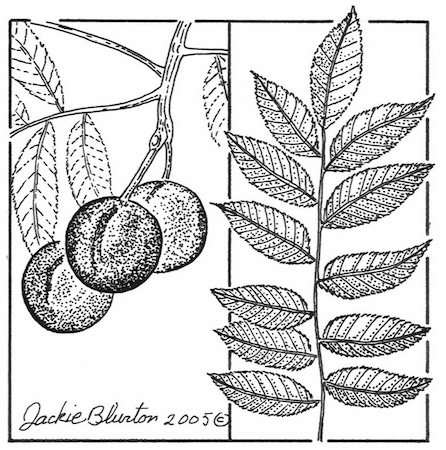
 Arizona Walnut
Art by Jackie Blurton
Nature Note by Dr. Roland Shook
Trips to the Gila River along Bill Evans Road, or similar habitats, will often reveal large patches of darkly stained pavement during late summer or early fall. On closer examination, you can often find small pieces of walnut shells produced by automobiles running over walnuts. These patches of shells and nuts attract various species of wildlife which can now dine on the nuts without expending the energy to crack them.
There are six species of walnuts in the United States and the commercial English walnut sold in stores is familiar to just about everyone.
The Arizona Walnut grows to a maximum size of 45 to 50 feet. This is primarily a tree of watercourses growing from 2,000 to 7,000 feet in elevation. Walnuts never occur in pure stands but are associated with willows, sycamores, cottonwoods, and oaks.
Walnuts are a good example of a plant with compound leaves. The leaves are 8 to 12 inches long and consist of 9 to 13 leaflets. The 1-inch diameter fruit consists of an outer husk and a deeply furrowed hard-shelled nut. The nut meat is deposited within an inner furrowed structure and is sweet to the taste.
Walnut wood is moderately heavy, hard, strong and very durable, and is used for cabinet making, fencing material, interior finishing, and fuel.
On your next outing along the Gila River, look for this interesting tree.