






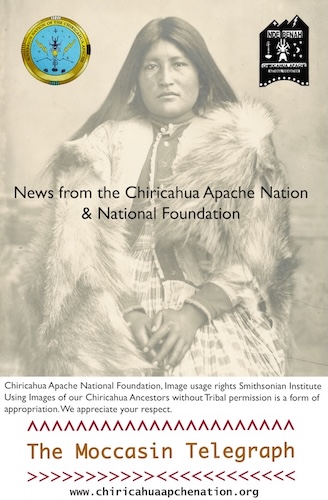
 The Moccasin Telegraph
Edition 2
April 28, 2026
By ŁII HUTAS
Chiricahua Apache Nation
Guh zhu daŁ, good things to all,
Mark your calendars for June 20th! We've been invited to be part of the 2026 Clay festival and will celebrate the new Chiricahua Apache mural underway! You can watch the mural's progress by visiting the Silver City, NM site on Yankie Street off Bullard. Share your responses on our Facebook page "Friends of the Chiricahua Apache nation." More info to come on how we'll be part of the Clay festival's events.
The Chiricahua Apache Sovereign Nation is made up of descendants who evaded surrender and capture.
There are many descendants of the free Chiricahua Apache. Tragically, they were forced into exile and scattered throughout Nde benah, our Traditional Territory. What we call Silver City, Grant County, Southwest New Mexico and beyond- is all within the Traditional Territory. In true Apache style to melt and blend into the environment, many Chiricahua Apache evaded capture and went to the Sierra Madre Mountains in Mexico, while others blended in with different cultures to avoid capture, boarding school or the bounties on them. There are many people living in our region with Chiricahua Apache ancestry! Others, in the late 1800s, were captured and eventually sent to Oklahoma as prisoners of war with those descendants choosing to stay in Oklahoma upon their release. Many remain there. We invite all descendants to join us.
Sometimes the descendants of the imprisoned group are invited, by Federal Government agencies, to visit our region, as the representatives of the Chiricahua Apache. The U.S. still exclusively aligns with those with "Federal recognition status", which the U.S. placed upon them. This ignores descendants who have remained in and around our traditional territory. It's harmful to our people and the Chiricahua Apache Sovereign Nation. By relying on this false system of authenticity, it can place a kind of discrimination in people's minds. It's misleading and creates a stigma against tribes and communities without federal recognition.
Please, keep in mind, when learning about the Chiricahua Apache Nation based in Silver City, New Mexico
We would like to address this ongoing confusion and the misinformation. It is important that folks don't get hung up on whether a Tribe is Federally recognized or not. The Colonial authority is not a reliable system to say who is legit or not. Please don't place your views on that. It is a result of genocidal acts. Still Federal recognition is helpful, especially for Tribes impacted by the Reservation system. There is financial support from the Federal Government that's tied to recognition, going back to all that was done to Tribes being relocated, placed on reservations, or imprisoned. The impact on Lifeways created a situation where the Federal Government provided funding to support basic needs as a result of the confinements and conditions of the dismantling of their traditional ways of self-sustainment, in relationship with Nature. This is a very complex issue.
For Tribes and Native groups not put on reservations, who found ways to evade it, there isn't the same relationship with the Federal Government. Generally, the Federal Government doesn't want to add more Tribes either, but efforts towards Federal Recognition do continue. Despite a system of genocide, currently, for many Native groups and Tribes, Recognition opens doors to access grants and other Governmental funds that can help support goals that are not available otherwise. A kind of catch 22, if you will. This includes the return of Traditional Lands to First Nations from both the State and Federal Government. There are growing examples of States returning land. This brings an opportunity to steward the wild lands and also honors Indigenous Culture. The 1852 Treaty of Santa Fe between the Chiricahua Apache and the U.S. Government is a standing Treaty, although the U.S. remains out of compliance. This Treaty supersedes the Federal recognition program for well over a century.
The Chiricahua Apache Nation holds the knowledge of ancient practices still, for living in balance with our natural environment.
New partnerships with existing conservation efforts should include the Chiricahua Apache Nation, naturally. We continue our own efforts through our Landback movement, where individuals are choosing to return acreage and property to the Chiricahua Apache Nation. We have Tribal properties throughout Nde benah through our expanding Landback movement. We are also working towards having the State of New Mexico return suitable land in our Traditional Territory. Plans are developing to locate a site for a Cultural Center and another site for Ceremony on the Land. We are looking for an office in town to support our work underway. Let us know if you know of any opportunities. Our economic interests are around Eco-Tourism, Education and the healing of our Culture and the relationships with our friends and other communities and of course caring for the Sacred Lands we share. This benefits all in our region both economically and through cultural enrichment. We envision a new way forward, inclusive of our Traditional Lifeways, history and culture led by our responsibilities to our ancestors and future generations to care for Nde benah. It is good that many of our most Sacred sites are still relatively unharmed, but protections to preserve them is a pressing issue as the threats to exploit them are increasing. Please join us in our efforts to protect Nde benah.
Become a sustaining member!
Go to our website; www.chiricahuaapchenation.org . Under our foundation menu there's a donate button where you can select how you would like to be part of what we're doing. You can also email us at
Respecting non-Federally recognized Tribes and Native groups
People can respect non-federally recognized tribes by acknowledging their inherent sovereignty regardless of federal recognition by learning about their specific history, especially, from Historic perspectives and Cultural holders of the Tribes. Awareness is supportive and is enriching to our communities both Native and Non-native to our region. There is mutual healing available from the past harms of those before us that we can all benefit from when seeing the truth and working together for something better for all of us. It is important to also know that the majority of Athabaskan Tribes in Alaska have opted to organize their people and land as corporations and not Bureau of Indian Affairs reservations.
Actionable steps:
• Identify Local Tribes: Use tools like the Native Land map to find out whose ancestral territory you are on, regardless of their federal status.
• Listen to Indigenous Voices: Seek out information written by local tribal members, not just from non-native organizations or textbooks.
• Understand Tribal Sovereignty: Recognize that sovereignty is inherent and exists regardless of federal recognition status.
• Engage with Local Priorities: Review the website, social media, and press releases of the specific tribe or local organization to understand their current goals, such as land return or cultural preservation.
Ways to Show Respect and Get Respect:
• Pay Voluntary Land Taxes (Honor Taxes): Support local tribes by contributing to organizations' Land Trust or other local indigenous-led organizations.
• Buy Authentic Art: Support artists by purchasing fine arts and crafts directly from tribal artisans, avoiding "knock-offs" or offensive cultural appropriation.
• Amplify Native Causes: Sign petitions, share social media, and support local initiatives to protect indigenous land and rights.
• Engage respectfully: When attending local indigenous events, follow proper etiquette, keep an open mind, and avoid putting the burden of education on Native people.
What to Avoid
• Do not ask for spiritual guidance or attend "new age" workshops, as authentic spiritual traditions are not for sale or adoption.
• Avoid using stereotypical, offensive names, or mascots.
• Do not assume all tribes or groups within a Tribe are the same; recognize the unique culture of each group and those in your local community.