






9/11, The Memory That Must Not Be Softened
Last Sunday, I wrote of the quiet moment when a civilization begins to forget the moral architecture that once held it together. This week the calendar itself refuses to let us forget.
Friday, one week before the twenty-fifth anniversary of September 11, New York's mayor signed two executive orders meant to honor that day. One established a citywide Day of Remembrance and Service. The other strengthened preparations against future terror. Then, in the same room, he handed the ceremonial pen used to sign those orders to his chief counsel, Ramzi Kassem.
Kassem once served as civilian defense counsel for Ahmed al-Darbi, an al-Qaeda operative convicted in the 2002 bombing of a French oil tanker. This attack was part of the network's broader campaign after September 11. Al-Darbi's sister was married to Khalid al-Mihdhar, one of the five hijackers who flew American Airlines Flight 77 into the Pentagon.
Families who lost loved ones that morning have called the gesture a direct insult to every family that bled. They are not wrong. Twenty-five years is long enough for memory to soften if we allow it. The towers fall a little more quietly in the mind. The names blur. The ideology that planned the murders is treated as one more "perspective" in a crowded marketplace of grievances. And when the mayor of the city that suffered most hands the pen that signed the remembrance order to a man whose professional work intersected with the very network that carried out the attack, something deeper than tone-deafness is on display. It is the polite, bureaucratic face of forgetfulness, and I believe it is intentional. Yes, I said it — intentional. It is a symbolic act of defiance — a finger wave to America and our foundational covenant with God!
Last week I said civilizations do not fall primarily through the strength of outsiders, but through the forgetfulness of their own majorities. Here is that forgetfulness in real time: a ceremonial act of remembrance that simultaneously dilutes the moral clarity the day demands. The order says, "Never forget." The pen says, "We already have."
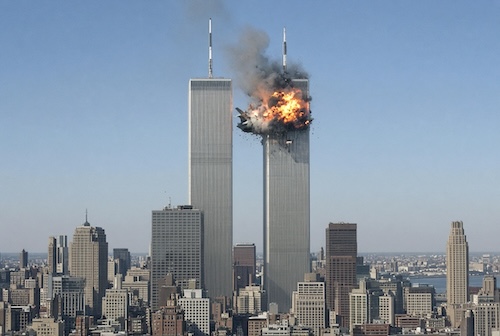
September 11 was not an abstract tragedy. It was the deliberate murder of nearly three thousand people by men who believed their god required the slaughter of the innocent. It was an act of war against a nation and against a civilization that still, however imperfectly, affirmed the equal dignity of every human being made in the image of God. To remember it truly is to refuse the soft language that turns murderers into "militants," ideology into "grievance," and justice into "narrative."
The families who still carry the weight of that morning do not need another executive order. They need a culture that still knows the difference between the victims and the evil ideology that killed them. They need leaders who will not treat the pen that signs remembrance as a prop to be passed to anyone whose résumé includes defending those who served the same cause.
Here in Grant County the sky is wide, and the distance from Lower Manhattan is measured in more than miles. Yet the same question reaches us: will we keep the memory sharp, or will we let it be managed, softened, and finally domesticated until it no longer disturbs anyone?
The moment before the turning is still open. The anniversary is the test of whether we still remember why it mattered We do not honor the dead by ceremonial paper alone. We honor them by refusing to forget who killed them, why they did it, and what kind of people we must remain if we are not to invite the same evil again. That is the remembrance that still costs something. And it is the only kind worth keeping.