






Image by Grok
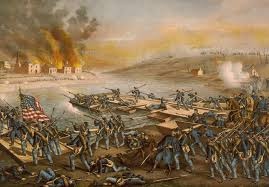
This Christmas season finds America embroiled in a Civil War. Not two armies engaged on the battlefield, but a very uncivil political war. It brings to mind the Christmas ceasefire of December 25, 1862, along the Rappahannock River near Fredericksburg, Virginia. The event was a seemingly impossible moment of civility following the devastating Battle of Fredericksburg, where Union forces under Maj. Gen. Ambrose Burnside suffered a humiliating defeat against Confederate troops led by Gen. Robert E. Lee.
How shocked those survivors, on both sides, must have felt after the carnage—the absolute slaughter of so many souls of all ages is mind-boggling! Think of it, old men and boys, all of them Americans, were blowing each other to pieces or desperately fighting hand-to-hand—sometimes literally brother against brother. Yet, amidst it all, a spark of humanity, brought on by the Christmas spirit, reminded them of their commonality and the futility of war.
It is my hope that this reflection captures the profound tragedy and irony of the American Civil War—the sheer horror of Fredericksburg's slaughter, where thousands of fellow Americans fell in futile charges against entrenched positions, followed mere days later by this fleeting moment of shared humanity across the frozen Rappahannock River. The soldiers who lived through it were indeed haunted by the contrast. Just 10 days after the battle's carnage—with over 12,000 Union casualties alone, many left wailing on the field overnight, men on both sides found themselves shivering in winter camps, staring at "enemies" who looked, sounded, and suffered just like them.
The most poignant surviving account comes from 18-year-old Union private John R. Paxton of the 140th Pennsylvania Infantry, who later became a minister and reflected deeply on that Christmas Day in his 1886 memoir. He was on picket duty in driving snow, cold, hungry, and homesick after the defeat. The following excerpt is how he described the initial despair:
"I was a dejected young patriot, wishing I hadn't done it... It was God's worst weather in God's forlornest, bleakest spot of ground, that Christmas day of '62 on the Rappahannock... Surely there is enough dampness around without adding to it your tears."
Then, spontaneously, the shouts began—"Merry Christmas, Johnny!" "Same to you, Yank!"—followed by bartering coffee for tobacco on little rafts. Paxton continued:
"We had bridged the river, spanned the bloody chasm. We were brothers, not foes... At the very front of the opposing armies, the Christ Child struck a truce for us, broke down the wall of partition, became our peace."
For those brief hours, the futility hit home: they were not abstract enemies, but young men sharing the same hardships, homesickness, and holiday longing. The warmth of that connection made the return to hostility even starker—Paxton noted how they forgot that "those men over there were our enemies, whom it might be our duty to shoot before evening."
Confederate accounts echo similar mixed emotions—pride in victory mingled with pity for the suffering they witnessed, and quiet amazement at the holiday fraternization downstream. Sergeant Berry Benson of the1st South Carolina recalled the winter picket exchanges with a tone of wry humanity, recognizing the shared misery despite the divide.
These moments didn't end the war or erase the brother-against-brother agony, but they revealed a spark of commonality amid senseless destruction. In Paxton's words, it was a reminder that, for one Christmas, "we kept Christmas, and our hearts were lighted for it." A fragile light, but a real one, in the darkest year of the conflict.
Now, in today's troubled times, we face similar problems for similar reasons, in that we are a nation divided against one another. We have been invaded by hordes of culturally incompatible aliens that threaten to overwhelm our resources and undermine our government. Generations of young people have been brainwashed into believing the lies of socialism/communism. God has been banished from public spaces, and Satan whispers beguilingly into willing ears.
The handwriting is on the wall—will we heed the message of that Christmas on the Rappahannock, or will we allow ourselves to be swept into another Uncivil War plunging us into the gaping jaws of Hell on earth—once again?