







The Half‑Dollar Lesson
I earned my first real money in my grandfather's cotton field. I was eight or nine, small enough that the sack dragged behind me like a reluctant shadow, but old enough to know that fifty cents was treasure. The Colored hands — as they were called in those days — who worked beside us children bent their backs in the same rows, though their labor was measured in survival, not novelty. We kids had it easy. They did not.
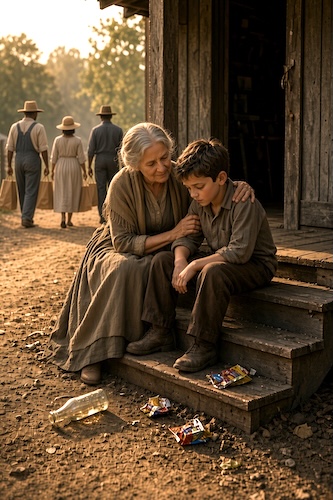
When the day's picking was done, everyone walked or drove to the little country grocery store on the highway. I remember the feel of that shiny half‑dollar in my palm — heavy with promise. I spent it on every sweet thing the store sold — candy, cookies, ice cream, and pop — buying gluttonous joy without restraint, and my body paid the price. Out behind the store, I knelt in the dust, emptying my stomach of everything I had just devoured.
I was sitting on the back porch afterward, pale and miserable, when my grandmother eased down beside me. She looked at me with that mixture of concern and amusement only grandmothers possess.
"What's the matter, son? Did you make a pig of yourself?"
That was the first time I heard the term nigger‑rich — a phrase I would later understand as cruel and rooted in prejudice, but in that moment it was simply her way of naming the foolishness of sudden wealth in the hands of a child. I didn't absorb the slur. I absorbed the lesson: wealth without wisdom becomes sickness.
While I gorged myself, the field hands bought bread and bologna to take home to their families. They spent their earnings on necessities, not indulgence. Their dignity was quiet, resigned, and utterly different from my childish spree.
One man approached the counter with his groceries and emptied his pockets — every coin, every crumpled bill — laying them out for the clerk to count. I asked my grandmother why he did that.
She whispered, "He can't count, son."
That whisper has stayed with me all my life. It was not spoken with contempt. It was spoken matter-of-factly — the words of a woman who had lived long enough to see how uneven the world really is.
That day taught me more than any classroom ever did. I learned that poverty is not laziness. I learned that dignity can be found in those who endure burdens I could barely comprehend. I learned that intelligence, education, and opportunity are not measures of worth. And I began to see that the world is not fair, but people can still be noble.
I was a child with a half‑dollar and a stomachache. They were adults with families to feed and little room for error. Yet they carried themselves with a quiet strength that has shaped my conscience ever since. It was a folk education — the kind our forefathers understood, the kind we have forgotten, the kind that teaches humility, not through lectures but through life.
And I have never forgotten the man who put all he had on the counter and waited for someone else to count it. He taught me, without a word, that the measure of a man is not what he earns, but how he bears what he lacks — with humility, responsibility, and dignity.