






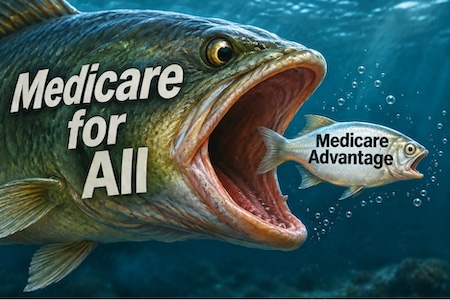
Deb Haaland pushed and is pushing for Medicare for All: In 2027, 60,000 are losing their Medicare Advantage Plan
On January 1, 2027, approximately 62,000 New Mexicans will find that their existing Medicare Advantage plans are no longer available. That is nearly one-third of the state's individual Medicare Advantage enrollment. In Bernalillo County, more than four in ten members must choose new coverage. What happened to the promise of stable, choice-driven, continuous medical care?
What is Medicare Advantage?
Medicare Advantage is not a separate federal entitlement from Medicare. It is an alternative way for eligible beneficiaries to receive Medicare-covered benefits through private insurers. Medicare Advantage is an existing private-plan option within Medicare.
The principal advantage of Medicare Advantage (Medicare Part C) is that an enrollee receives hospital coverage, physician services, and usually prescription drug coverage through one private insurance plan, often with lower premiums and additional benefits not included in Original Medicare. For many retirees, the appeal comes from lower monthly costs, predictable annual financial exposure, and additional healthcare benefits.
Seven potential advantages for enrollees: 1. Low or zero additional monthly premiums. Many Medicare Advantage plans charge no premium beyond the regular Medicare Part B premium. However, deductibles and copayments still apply. 2. An annual out-of-pocket spending limit. Medicare Advantage plans must limit what enrollees pay for covered Medicare Part A and B services. Original Medicare alone has no comparable annual limit. 3. Prescription drug coverage. Most Medicare Advantage plans include Part D prescription benefits, eliminating the need to enroll in a separate drug plan. 4. Dental, vision, and hearing benefits. Many plans cover services such as routine dental care, eye examinations, glasses, and hearing aids that Original Medicare generally does not cover. 5. Coordinated medical care. Some plans organize care through primary care physicians, specialists, and hospital networks, which can help patients manage multiple conditions. 6. Additional wellness benefits. Depending on the plan, these can include fitness memberships, transportation assistance, and certain over-the-counter products. 7. Convenience. Enrollees often receive medical, hospital, and prescription coverage through a single insurance company, with one membership card and coordinated customer service.
What happens when a Medicare Advantage plan enrollee loses that program?
When an insurance company discontinues a Medicare Advantage plan, the beneficiary does not lose Medicare eligibility. However, the beneficiary may have to change insurance plans, physicians, specialists, hospitals, prescription drug arrangements, or some combination of these.
The critical public-policy question is whether New Mexicans who were promised healthcare choice and continuity can retain their established medical relationships when insurers discontinue Medicare Advantage plans.
Another distinction matter: Medicare for All generally refers to proposals for a universal, government-financed healthcare system, whereas Medicare Advantage is an existing private-plan option within Medicare. They are not the same program, and the discontinuation of Medicare Advantage plans does not, by itself, show that Medicare for All caused those changes.
What does the future hold for the other 180,000 New Mexicans who have Medicare Advantage Plans?
In February 2019, while serving in the U.S. House of Representatives, Haaland was an original cosponsor of the Medicare for All Act of 2019. It aimed to create a universal healthcare system for all U.S. residents.
As a political progressive, and during her 2026 campaign for Governor of New Mexico, she has continued to support Medicare for All and universal access to healthcare. While also outlined state-level steps such as pushing towards a public health insurance option and protecting Medicare.
Medicare for All is a single-payer, tax-funded system in which the federal government pays directly for all comprehensive health care services. Most federal Medicare for All bills (such as those introduced in Congress) effectively eliminate private health insurance plans that duplicate the coverage provided by the universal program. Because Medicare Advantage plans act as private alternatives bundling Part A and Part B coverage, they would be phased out or replaced.
The Law of Unintended Consequences
I attended Congressman Heinrich's forum on the Affordable Healthcare Bill, also known as Obamacare. Heinrich was caught by surprise when the director of the UNM-H Emergency Department and the founder of a South Valley health clinic opposed Obamacare (no one was surprised that the president of the Rio Grande Foundation opposed Obamacare). Heinrich concluded the forum stating that he would vote for passage of Obamacare. Citing what we all remember: If you like your plan, you can keep it. If you like your doctor, you can keep your doctor. Will lower premiums by $2,500. Will cover tens of millions of uninsured Americans.
Mick Rich Contractors' health insurance premiums increased to the point where we could no longer cover the employees' family healthcare premiums, and our insurance plan was eliminated. My primary care doctor retired because of the increased paperwork. New Mexicans, not Obamacare, funded Medicaid for the uninsured.
About 55% of New Mexicans' healthcare plans are Medicare or Medicaid. Ten percent still lack health insurance, and the remainder have private health insurance. Medicare and Medicaid reimbursement rates are too low for our medical providers to stay in our state. A good friend's medical procedure was canceled because their only neurosurgeon moved out of state; he is now seeking care in Arizona. At a recent event, the Governor said the new rural airport facility will make it easier for the sick and injured to get medical care.
More Choices, Not Less
In my forty-three years in business, I have never found an individual who declined our paid health insurance coverage because they are covered by Indian Health Services or Veterans Medical Services.
I have never heard or read that Deb Haaland declined the Health Insurance that came with serving as a Congresswoman or as Secretary of the Interior in favor of Indian Health Services. I have never heard Deb Haaland talk about what great medical care she receives at Indian Health Services.
If medical care choices are good for Deb Haaland, they are good for all New Mexicans. This Tuesday, vote for Gregg Hull and send a message to Deb Haaland: Keep your hands off my healthcare.
____________________________________________
As I understand it, for people with Medicare who live in rural New Mexico, Medicare Advantage isn't a benefit because rural healthcare providers don't accept it.