








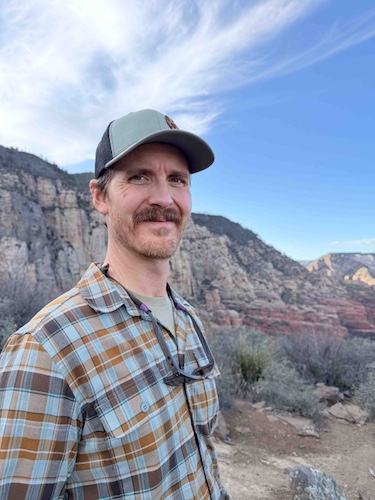
 Caleb Loughran, Ph.D., is an assistant professor of ecology and evolution at WNMUSILVER CITY, NM — Western New Mexico University (WNMU) Assistant Professor of Ecology and Evolution Caleb Loughran, Ph.D., published extensive findings that decode the complex survival and social behaviors of rattlesnakes in Central and Eastern Washington State. His research was primarily conducted in the rugged shrub-steppe landscapes of the Columbia Basin in the Pacific Northwest; the research provides a detailed look at how environmental temperatures and communal social structures dictate the lives of these apex predators.
Loughran's research on the Northern Pacific Rattlesnake (Crotalus oreganus) demonstrates that for these snakes, body size most critically determines their daily "schedule" and survival. Juvenile snakes possess a much higher surface-area-to-volume ratio than adults, meaning their outer skin area is large compared to their overall body mass. As a result, they heat up and cool down more quickly.
Eastern Washington's volatile climate brings dramatic temperature swings between dawn and dusk, forcing these snakes to operate within much narrower safety windows. Loughran's thermal modeling shows that an adult snake can use its mass to buffer against a sudden spike in solar radiation or intense sunlight. However, a younger snake can overheat lethally in just minutes. This high-stakes balancing act forces younger generations to adjust where they hide and when they hunt prey.
In addition to thermal biology, Loughran's work challenged the belief that rattlesnakes are strictly solitary except during winter hibernation. "Field observations show the consistent use of communal shedding sites—specific geological features called 'shed rocks,' Loughran explained.
This is where dozens of snakes gather to shed their skin, a process called ecdysis. These sites are not chosen at random but represent essential social and biological hubs. The snakes return to them year after year, a behavior known as site fidelity. This site fidelity suggests a more complex social organization than previously understood in herpetology—the study of reptiles and amphibians. "It points toward a shared environmental intelligence among local populations," Loughran said. By documenting these gatherings, Loughran shows that the biological needs of these reptiles often drive them toward communal behaviors once thought reserved for only a few social animal species.
Loughran conducted extensive research on lizard heat-stress physiology during his time at the University of New Mexico (UNM) and has published several papers on the topic. He investigated how lizards use panting as a thermoregulatory tool and found that a species' capacity for evaporative cooling, which reflects the thermal demands of its habitat, can affect its climate risk differently.
Loughlan is also working with colleagues to develop a project investigating the effects of solar farms on wildlife microclimates; he also recently authored a review paper with colleagues, which was just published in the journal Biological Reviews.
Loughran has also applied for a grant to study how climate change affects the Gila's local snake populations. He views his ongoing work in the Pacific Northwest as a foundation for future local projects involving WNMU students. Additionally, Loughran is in contact with the New Mexico Department of Game and Fish and is hoping his findings can eventually inform their conservation strategies.
For more about the Department of Natural Sciences at WNMU or Loughran's projects, visit www.wnmu.edu.