








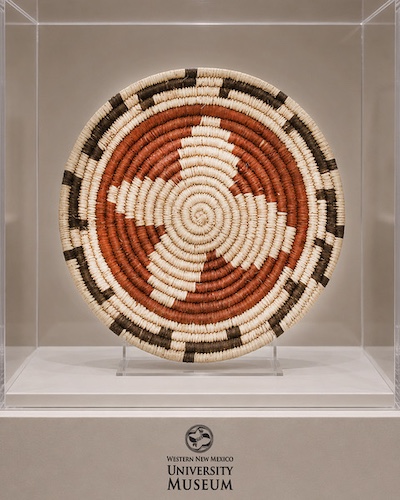
 One of many new acquisitions at the WNMU Museum: Seri/Comcaac BasketSILVER CITY, NM — The Western New Mexico University Museum announces a significant expansion of its permanent collection following a successful transfer of objects from the Museum of Northern Arizona.
The strategic acquisition brings a diverse array of Casas Grandes pottery and ethno-historic Indigenous Mexican objects to Silver City, effectively growing areas of the museum's holdings that were previously underrepresented. The transfer originated when the MNA deaccessioned objects that no longer aligned with its mission. The two institutions collaborated to ensure these culturally significant materials remained in the public trust.
Danielle Romero, Ph.D., director of the WNMU Museum, noted the importance of finding a permanent home for these specific styles of artistry.
"The opportunity to bring these pieces to Silver City allows us to fill critical gaps in our Casas Grandes collection," Romero said. "By working with the Museum of Northern Arizona, we are ensuring that these pre-Hispanic vessels, specifically the Madera Black-on-red style, are preserved in a setting where they can be properly studied and appreciated by our local community and visiting scholars alike."
A major highlight of this transfer is the strengthening of the museum's pre-Hispanic Casas Grandes collection. The acquisition notably increased the number of effigy vessels under the museum's care and increased Madera Black-on-red vessels, a ceramic style the WNMU Museum previously only had one example of.
Beyond archaeological materials, the transfer includes a vibrant selection of ethno-historic objects, primarily dating from the 1950s and 1960s. These items showcase the traditions and artistry of several Indigenous communities, including Mata Ortiz ceramics, Wixárika (Huichol) woven accessories, Rarámuri (Tarahumara) baskets, and Comcaac (Seri) baskets and jewelry.
Romero emphasized that the new additions represent a vital link to the living traditions of Indigenous communities. "Adding items like the Comcaac jewelry and Rarámuri baskets allows us to tell a more complete story of the enduring artistry and cultural resilience of various groups" Romero said.
The WNMU Museum is committed to making these additions accessible to the community. While some objects are already on display, the majority will be available to the public after the formal cataloging process is complete.
To further global accessibility, the museum has launched an online catalog. This portal is in its early stages, with objects, photographs, and archives added almost daily. In keeping with a commitment to ethical stewardship, staff maintain full control over the digital portal to ensure that no objects believed to be from funerary or sacred contexts are made public.
Explore the growing collection in person or online at https://museum.wnmu.edu.